A clogged drain rarely shows up overnight. It builds for weeks or months from small things: a little grease poured down the sink, a wipe flushed down the toilet, a slow drain you decided to live with. Most of those habits are easy to change.
To prevent clogged drains, keep grease and food scraps out of the kitchen sink, catch hair with drain screens, flush only toilet paper and deal with slow drains early. If clogs keep coming back or several drains slow down at once, the cause is probably deeper in your sewer line and needs a professional look.
Cooking grease looks harmless while it’s liquid. Once it cools inside the pipe, it hardens and sticks to the walls, then collects food bits until the pipe is blocked. Butter, meat fat and salad dressing count as grease too.
Running hot water doesn’t fix it. East Bay Municipal Utility District explains that the grease cools and hardens farther down the pipe, and that detergents that claim to dissolve grease can simply move the blockage along.
What works instead: let cooking grease cool, pour it into a jar or can and throw it in the trash. Wipe greasy pans with a paper towel before you wash them.
A garbage disposal grinds food into smaller pieces, but it doesn’t stop grease from going down the drain. Scrape plates into the trash and put a strainer in the sink to catch what’s left.
Extension guidance from the University of Kentucky says coffee grounds, eggshells and nut shells shouldn’t go down the sink drain, even if you have a disposal. Starchy foods like rice and pasta swell in water and can pack together, so they belong in the trash as well.
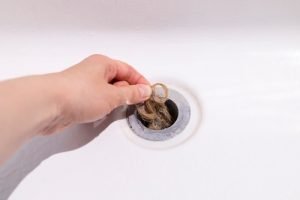
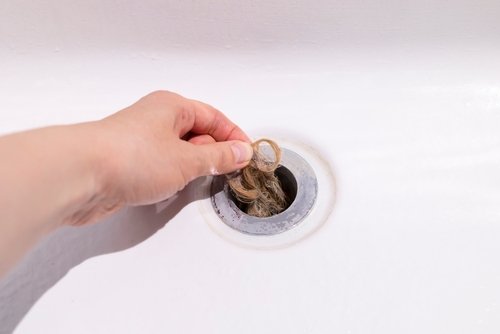
Hair and soap residue are two of the most common causes of slow shower and sink drains. A drain screen in every sink, tub and shower catches most of it. Empty the screens whenever you see buildup. For a busy shower, about once a week is a good habit.
A toilet is built for human waste and toilet paper. Wipes labeled “flushable” don’t break down the way paper does, and UF/IFAS Extension advises homeowners on city sewer not to flush them. The same goes for paper towels, cotton swabs, dental floss and feminine hygiene products. A small lidded trash can in the bathroom gives everyone an easy place to put them.
Some clogs start outside the house. On a city sewer system, the pipe running from your home to the main line under the street is usually the homeowner’s responsibility, according to UF/IFAS Extension. So a blockage there is yours to fix.
Two things cause most of the trouble in that line. Tree roots can enter through small cracks or loose joints and trap debris as they grow. Older pipe, such as clay or cast iron, can crack or settle over time. If your home is older or has large trees near the sewer line, a video camera inspection shows the pipe’s condition before a backup happens. Our guide to what causes sewer backups in Pembroke Pines goes deeper on these causes.
Go easy on chemical drain cleaners. Used repeatedly or the wrong way, harsh chemicals can create safety hazards and damage some plumbing parts. Try a plunger first, and never mix products. If a clog keeps returning, pouring more chemicals won’t fix it. Something deeper is usually going on.
Your drains usually give notice before they stop completely. Watch for-:
One slow drain is usually a local clog. Several slow drains at once, or gurgling toilets, point to the main sewer line. If sewage backs up, stop using the affected fixtures and avoid direct contact with the water.
A tip from Joe Meloi if a sink drains slowly today, a blockage is usually already forming inside the pipe, and clearing it early often prevents a much larger repair later.
No single schedule fits every home. Call when clogs keep returning, when more than one drain is slow or when a drain has backed up. Homes with older pipes, large trees near the sewer line or a big household may benefit from a periodic camera inspection, since it shows the pipe’s condition before anything backs up.
A drain snake breaks up or pulls out a blockage. Hydro jetting uses high-pressure water to wash grease, residue and deposits off the inside of a pipe, and it can help with recurring blockages. It isn’t right for every pipe, though, so a plumber should check the pipe’s material and condition first. A camera inspection shows what is inside the line, so the fix matches the problem.
Most clog prevention comes down to what goes down the drain and how quickly you act on slow ones. When a clog does get ahead of you, Great American Plumbing & Drain Cleaning offers sewer and drain cleaning for Pembroke Pines homes, from stubborn sink clogs to main sewer line problems. See our Pembroke Pines plumbing page or call (954) 578-1080
We regularly post on our blog section, so feel free to checkout all the articles and gain some knowledge.
Great American Plumbing and Drain Cleaning, Inc. © 2026