A damaged sewer pipe can cause recurring drain clogs, foul odors, slow drainage, and costly property damage if left untreated. While traditional sewer repair often involves extensive excavation, trenchless pipe lining offers a less invasive solution that restores damaged pipes from the inside. This modern repair method helps homeowners and businesses reduce property disruption, save time, and avoid many of the restoration costs associated with conventional repairs.
Also known as cured-in-place pipe (CIPP) lining, trenchless pipe lining uses a resin-saturated liner to create a durable new pipe within the existing one. Before recommending this repair, plumbers typically perform a professional pipe inspection to evaluate the condition of the sewer line. To evaluate the pipe’s condition. If the sewer line is a suitable candidate, trenchless pipe lining can provide a long-lasting solution without replacing the entire pipe. Understanding how the process works, its benefits, and when it’s the right choice can help you make an informed decision about your plumbing services needs.
Trenchless pipe lining, also known as cured-in-place pipe (CIPP) lining, is a modern sewer repair method that restores damaged or aging pipes without extensive excavation. Instead of replacing the entire sewer line, plumbers insert a flexible liner coated with epoxy resin into the existing pipe. Once positioned, the liner is inflated and cured, creating a strong, seamless pipe within the original one.
This minimally invasive repair method is commonly used to fix cracks, minor leaks, corrosion, root intrusion, and other forms of pipe deterioration while helping preserve landscaping, driveways, patios, and sidewalks. Before recommending pipe lining, plumbers typically perform a sewer camera inspection to determine whether the existing pipe is suitable for the repair.
When professionally installed, trenchless pipe lining creates a smooth, durable interior that improves water flow, helps reduce future blockages, and extends the lifespan of the sewer line. It provides homeowners and businesses with a long-lasting alternative to traditional pipe replacement while minimizing disruption to their property.
The trenchless pipe lining process repairs damaged sewer pipes with minimal excavation, making it a faster and less disruptive alternative to traditional sewer repair. While every project is different, the process generally includes the following steps:
Plumbers begin with a sewer camera inspection to locate cracks, corrosion, leaks, root intrusion, or other damage. This inspection confirms whether the existing pipe is suitable for trenchless pipe lining.
The sewer line is thoroughly cleaned using hydro jetting or specialized equipment to remove grease, debris, mineral buildup, and tree roots. Proper cleaning helps the liner bond securely to the pipe.
A flexible liner coated with epoxy resin is inserted into the damaged pipe and positioned to cover the affected section without extensive digging.
The liner is inflated until it fits tightly against the inside of the existing pipe. The resin is then cured using hot water, steam, air, or ultraviolet (UV) light, creating a durable, seamless pipe within the original sewer line.
Once the liner has cured, plumbers perform another sewer camera inspection to verify the quality of the repair and ensure wastewater flows properly through the newly lined pipe.
With minimal excavation required, trenchless pipe lining helps preserve landscaping, driveways, patios, and sidewalks while providing a durable, long-lasting repair solution.
Sewer pipes often show warning signs before a major failure occurs. Recognizing these issues early can help prevent costly damage and determine whether trenchless pipe lining is the right repair solution. If you notice any of the following problems, schedule a professional sewer camera inspection to assess your sewer line.
Occasional clogs are normal, but recurring blockages in multiple drains may indicate a damaged sewer line rather than a simple drain issue. If drain cleaning only provides temporary relief, the underlying pipe may need repair.
Slow-draining sinks, showers, bathtubs, or toilets can signal cracks, corrosion, or buildup inside the sewer pipe. A professional inspection can determine whether trenchless pipe lining is a suitable solution.
Persistent sewer odors inside or outside your property may indicate wastewater escaping through cracks or damaged joints. Addressing the issue early can help prevent more extensive damage.
Frequent sewage backups often point to significant sewer line damage or blockages. A professional sewer repair evaluation can determine the most effective repair method.
Unusually green grass, standing water, or consistently damp soil above the sewer line may indicate an underground leak caused by a damaged pipe.
Older homes with cast iron, clay, or Orangeburg sewer pipes are more susceptible to corrosion and deterioration. In some cases, cast iron sewer line descaling followed by trenchless pipe lining can restore the pipe without full replacement.
Tree roots can enter small cracks or loose joints in sewer pipes, causing recurring clogs and restricted flow. After removing the roots and inspecting the pipe, plumbers can determine whether trenchless pipe lining is the right repair option.
If you’re experiencing any of these warning signs, having your sewer line inspected early can help identify the problem before it leads to more extensive repairs.
Trenchless pipe lining is a popular sewer repair solution because it restores damaged pipes with minimal disruption. When a sewer line is suitable for lining, homeowners and businesses can benefit from several advantages over traditional excavation.
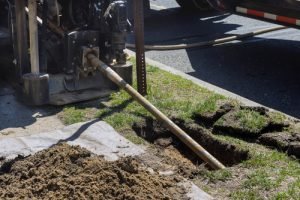
Unlike conventional sewer repairs, trenchless pipe lining requires only small access points instead of large trenches. This helps preserve landscaping, driveways, sidewalks, and other outdoor features while reducing cleanup.
With less excavation required, many trenchless pipe lining projects can be completed more quickly than traditional pipe replacement, minimizing disruption to your home or business.
Because there is less digging, property owners often avoid many of the restoration costs associated with repairing landscaping, concrete, patios, and other structures after excavation.
The epoxy resin used in cured-in-place pipe (CIPP) lining creates a seamless, corrosion-resistant pipe within the existing sewer line. When professionally installed, it can provide reliable performance for decades.
The smooth interior of the new liner helps wastewater flow more efficiently while reducing the likelihood of future blockages caused by rough or deteriorated pipe surfaces.
By restoring the existing pipeline instead of replacing it, trenchless pipe lining reduces excavation, construction waste, and unnecessary disruption to the surrounding landscape.
Trenchless pipe lining can repair cracks, minor leaks, corrosion, joint separation, and damage caused by tree roots. A professional sewer camera inspection can determine whether the existing pipe is a suitable candidate.
Although every project is unique, trenchless pipe lining can reduce labor, restoration costs, and future maintenance while extending the life of your sewer system.
If you’re experiencing recurring sewer issues, a trusted plumbing services professional can inspect your sewer line and recommend the most appropriate repair solution.
When a sewer line is damaged, homeowners generally have two repair options: trenchless pipe lining or traditional sewer repair with excavation. The best choice depends on the condition of the existing pipe, the extent of the damage, and the results of a professional inspection.
|
Feature |
Trenchless Pipe Lining |
Traditional Sewer Repair |
|
Excavation |
Minimal digging |
Extensive excavation |
|
Property Disruption |
Preserves landscaping and hardscapes |
May require restoration of outdoor areas |
|
Project Timeline |
Often completed faster |
Usually takes longer |
|
Cleanup |
Minimal cleanup |
More cleanup and restoration |
|
Repair Method |
Creates a new pipe inside the existing one |
Replaces the damaged pipe |
|
Best For |
Cracks, corrosion, minor leaks, and root intrusion |
Collapsed, crushed, or severely damaged pipes |
Trenchless pipe lining is ideal when the existing sewer pipe remains structurally sound but has cracks, corrosion, minor leaks, or root intrusion. A video inspection helps determine whether the pipe can be restored without full replacement.
If a sewer line has collapsed, shifted significantly, or suffered extensive structural damage, excavation and pipe replacement may be the safest and most effective solution.
Every sewer system is different. An experienced plumbing services professional can inspect your sewer line, explain your repair options, and recommend the most appropriate long-term solution for your property.
Trenchless pipe lining is an effective repair option for many sewer line problems, but it’s not suitable for every situation. A professional sewer camera inspection is the best way to determine whether your existing pipe can be restored without replacement.
Small cracks, pinhole leaks, corrosion, and worn pipe walls can often be repaired using trenchless pipe lining. The epoxy liner creates a seamless interior that strengthens the existing pipe and helps prevent future leaks.
Older cast iron sewer lines often develop corrosion and scale buildup. In many cases, cast iron sewer line descaling is completed before installing the liner to ensure a secure bond and long-lasting repair.
After tree roots have been professionally removed and the pipe has been cleaned, trenchless pipe lining can seal damaged areas and help reduce the risk of future root intrusion.
If your sewer line runs beneath a driveway, patio, sidewalk, or landscaped area, trenchless pipe lining can often restore the pipe with minimal excavation, reducing disruption and restoration costs.
Pipe lining works best when the existing sewer line has maintained its overall shape. If the pipe has collapsed, shifted significantly, or suffered severe structural damage, traditional sewer repair may be the better option.
When professionally installed, cured-in-place pipe (CIPP) lining creates a durable, corrosion-resistant pipe that can provide reliable performance for decades.
Every sewer system is unique. A trusted plumbing services professional can inspect your sewer line, explain your repair options, and determine whether trenchless pipe lining is the most effective solution for your property.
One of the biggest advantages of trenchless pipe lining is its durability. When professionally installed using high-quality materials, a lined sewer pipe can last 50 years or more. The cured-in-place pipe (CIPP) liner creates a seamless, corrosion-resistant interior designed to withstand everyday use.
Several factors influence its lifespan, including the condition of the existing pipe, the quality of the installation, and ongoing maintenance.
A successful repair begins with a sewer camera inspection and proper pipe preparation. Services such as hydro jetting help remove grease, scale, debris, and tree roots, allowing the epoxy liner to bond securely to the existing pipe.
The epoxy resin forms a smooth, joint-free interior that resists corrosion, leaks, cracks, and root intrusion. With fewer joints and a durable surface, the repaired pipe typically requires less maintenance.
Regular plumbing maintenance, periodic sewer camera inspections, and avoiding grease or non-flushable items can help extend the life of the repaired sewer line.
The lifespan of trenchless pipe lining depends on the condition of the original pipe and proper installation. A trusted plumbing services professional can evaluate your sewer system and determine whether pipe lining is the right long-term solution.
For many homeowners and businesses, trenchless pipe lining offers a durable, cost-effective repair that can provide reliable performance for decades.
The cost of trenchless pipe lining varies because every sewer system is different. Although this repair method often reduces excavation and property restoration costs compared to traditional sewer repair, the final price depends on several factors identified during a professional inspection.
Longer sewer lines require more liner material, labor, and installation time than shorter repairs, which can increase the overall cost.
Minor cracks, corrosion, and joint separation are often suitable for trenchless pipe lining, while severely damaged or collapsed pipes may require additional repairs or replacement.
The diameter and material of the existing sewer pipe, such as cast iron, clay, or PVC, can influence the repair method and overall project cost.
Before the liner is installed, the pipe must be properly cleaned. Services such as hydro jetting or cast iron sewer line descaling may be needed to remove grease, scale, corrosion, or tree roots and prepare the pipe for lining.
Although trenchless repairs require minimal digging, sewer lines located beneath structures, driveways, or landscaped areas may require additional planning or specialized equipment.
A sewer camera inspection helps identify the location and severity of the damage. If additional issues are found, they may need to be addressed before the lining process begins.
While the initial cost varies, trenchless pipe lining can reduce excavation, property restoration, and future maintenance costs, making it a cost-effective long-term investment for many property owners.
The best way to determine the cost of your project is to schedule an inspection with a trusted plumbing services professional, who can evaluate your sewer system and provide a customized repair estimate.
When sewer line problems occur, choosing an experienced plumbing company is essential. At Great American Plumbing & Drain Cleaning, we provide reliable plumbing services and customized solutions for homeowners and businesses throughout Broward County.
Our team diagnoses and repairs a wide range of sewer line issues, including drain clogs, corrosion, leaks, and root intrusion. Every project begins with a thorough evaluation to recommend the most effective repair.
We use sewer camera inspections and modern diagnostic equipment to accurately locate sewer line problems and determine whether trenchless pipe lining is the right solution.
Whenever possible, we recommend repair methods that reduce excavation and help protect landscaping, driveways, patios, and sidewalks.
Every sewer system is different. If trenchless pipe lining isn’t the best option, we’ll explain your repair choices and recommend the solution that best fits your property’s needs.
From inspection to project completion, we’re committed to dependable workmanship, clear communication, and lasting repair solutions.
If you’re dealing with recurring sewer backups, slow drains, or other sewer line problems, contact Great American Plumbing & Drain Cleaning to schedule a professional sewer camera inspection and learn whether trenchless pipe lining is the right repair for your property.
Trenchless pipe lining can be an excellent alternative to traditional sewer repair when the existing pipe is structurally suitable for lining. Because it requires minimal excavation, it often reduces property disruption, shortens repair time, and lowers restoration costs. A professional sewer camera inspection can determine the best repair option for your sewer line.
When professionally installed using high-quality materials, trenchless pipe lining can last 50 years or more. Regular plumbing maintenance and periodic sewer inspections can help maximize the lifespan of the repaired pipe.
No. Trenchless pipe lining is effective for many pipes with cracks, corrosion, minor leaks, or root intrusion. However, pipes that have collapsed, shifted significantly, or suffered severe structural damage may require traditional pipe replacement instead.
Most trenchless pipe lining projects require only small access points rather than extensive excavation. This helps preserve landscaping, driveways, patios, sidewalks, and other outdoor features while minimizing cleanup and restoration.
Plumbers begin by inspecting the sewer line with a specialized camera to evaluate the condition of the sewer line. If necessary, the pipe is cleaned using hydro jetting before installation. Based on the inspection results, they can recommend whether trenchless pipe lining is the most effective long-term repair option.
Great American Plumbing and Drain Cleaning, Inc. © 2026
trenchless sewer pipe lining, underground pipe lining, plumbing, sewer pipe lining, trenchless sewer lining
Trenchless pipe lining is a revolutionary plumbing method that allows for the repair or replacement of damaged pipes without the need for extensive excavation. This technique involves inserting a resin-saturated liner into the existing pipe, which is then cured to create a new, durable pipe within the old one. This method significantly reduces the disruption to your property, making it an ideal choice for residential and commercial plumbing needs.
This innovative approach not only minimizes the labor involved but also decreases the overall cost associated with traditional plumbing repairs. For instance, homeowners can avoid costly landscaping repairs and disruptions to driveways or sidewalks, making trenchless pipe lining a more appealing option for maintaining the integrity of their properties while ensuring efficient plumbing solutions.
The benefits of trenchless pipe lining extend beyond cost savings and minimal disruption. One of the primary advantages is the longevity of the repair; the materials used in trenchless lining are designed to withstand corrosion and wear, often lasting over 50 years. This durability means that homeowners can enjoy peace of mind knowing their plumbing system is robust and reliable.
Additionally, trenchless pipe lining is environmentally friendly. By reducing the need for excavation, this method minimizes waste and preserves the existing landscape. It also helps prevent future leaks and breakages, contributing to a more sustainable plumbing solution that benefits both the homeowner and the environment.
When comparing trenchless pipe lining to traditional plumbing methods, the differences in approach and impact on property are significant. Traditional methods often require extensive digging, leading to higher labor costs and substantial property disruption. In contrast, trenchless technology allows for repairs to be made with minimal surface disturbance, saving time and reducing overall project costs.
Moreover, traditional plumbing repairs can lead to long-term issues, such as landscaping damage and the need for additional repairs post-excavation. With trenchless pipe lining, homeowners can avoid these pitfalls, as the process is designed to be efficient and non-invasive, ensuring that their properties remain intact throughout the repair process.
Choosing the right plumbing service for trenchless pipe lining is crucial to ensuring a successful repair. Homeowners should look for licensed and experienced plumbers who specialize in trenchless technology. It's important to check reviews and testimonials from previous clients to gauge the quality of service provided.
Moreover, a reputable plumbing service will offer a thorough consultation, explaining the trenchless process and providing a detailed estimate. This transparency not only helps in understanding the costs involved but also builds trust between the homeowner and the plumbing service, ensuring that the project will be handled with the utmost care and professionalism.